- Home
- Curriculum
- Our Subjects
- Religious Education
Religious Education
Back
"FaitH is to believe what we do not see, and the reward of this faith is to see what we believe." ST augustine.

Our vision for Religous Education at All Saints
RE is about helping children and young people hold balanced and well-informed conversations about religion and belief. RE asks challenging questions about the meaning of life, beliefs about God, issues of right and wrong and what it means to be human. It develops students’ knowledge and understanding of Christianity, Islam, other religious traditions, and other world views that offer answers to these challenging questions. It offers opportunities for personal reflection and spiritual development. It enhances students’ awareness and understanding of religions and beliefs, teachings, practices and forms of expression, as well as of the influence of religion on individuals, families, communities and cultures.
RE encourages students to learn from different religions, beliefs, values and traditions, while exploring their own beliefs and questions of meaning. It challenges students to reflect on, consider, analyse, interpret and evaluate issues of truth, belief, faith and ethics and to communicate their responses.
RE encourages students to develop their sense of identity and belonging. It enables them to flourish individually within their communities and as citizens in a diverse society and global community.
How we will achieve this
Religious Education at All Saints offers an ambitious and well-sequenced journey through key beliefs, practices and big questions across KS3, which then links clearly into selected elements of the KS4 curriculum. The curriculum is carefully designed to build knowledge over time, helping students deepen their understanding of religion and belief while encouraging curiosity and a genuine love of learning. Lessons are inclusive and accessible for all students, supporting them to develop important skills such as interpretation, critical thinking, evaluation and making reasoned judgements.
RE lessons are driven by purposeful, challenging questions that encourage students to think deeply and reflect on their own ideas as well as the beliefs of others. Students are taught the knowledge they need to engage confidently with these questions, allowing them to explain concepts clearly, make connections and respond thoughtfully to different viewpoints.
The RE curriculum also makes strong links to the local context, alongside national and global perspectives, helping to build students’ cultural capital. By exploring religion and belief as it is lived and experienced in the local community and wider world, students are supported in understanding their own surroundings and the role religion plays in society. This ensures that RE at All Saints has a meaningful impact, preparing students to engage respectfully and thoughtfully with the diverse world they live in.

How we will assess Religious Education
 Click on Image to download.
Religious Education GCSE Results 2025

KS 3 Lessons
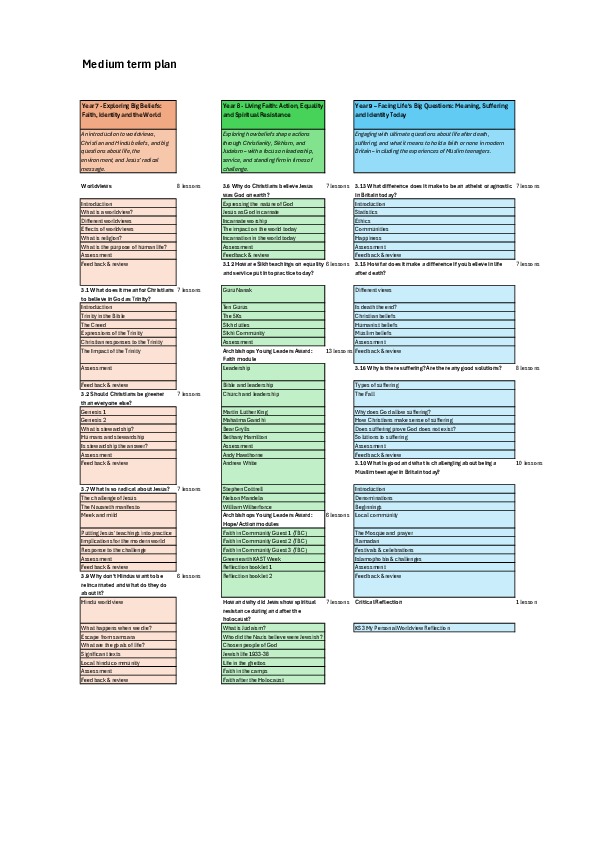
KS3 Pathways


KS4 Assessment

Homework
KS3
Follows the Masters of Recall programme. All students are given a Masters of Recall booklet according to their year group, these booklets contain the Knowledge Organisers for the topics they will be studying in Religious Education.
Students are set homework via assignments on Teams. Students are given clear instructions which part of the Knowledge Organiser they need to learn using one of the revision strategies at the front of the Masters of Recall booklet.
When the homework is due in class, students are expected to show the classroom teacher their completed revision strategy and then they will complete ten multiple choice questions based on the knowledge learnt.
KS4
At GCSE, students are given a range of different homework activities which centre around crucial knowledge.
These include Total REcall, Seneca and Microsoft Forms (multiple choice questions). These homework’s coincide with the crucial knowledge being taught in the lessons. As students move towards key assessment points and the GCSE exams, homework will also include answering exam questions from sections of previous exam papers.
What is the Impact of our work?
We use artefacts to help bring religion alive. Here are some Hinduism artefacts to help students understand the major deities.
Here are some examples of Y7 work. RE allows students to reflect upon their spiritual and human experiences in a creative way. Here are some ideas about God.
 |
 |
The students were asked to think about the concept of stewardship and came up with some top tips on how to look after our environment!
Cultural Capital Opportunities

Click on Image to download.
- Young Leaders Award
- Faith visitors: Respect Me PDE Days
- Working with Chaplaincy
- Archbishop's Award
- Various opportunities to reflect on society’s beliefs and values to develop students' SMSC development
- Faith Network Club
Reading Journey

Humanities Prefect
UPDATE DUE SUMMER 2026
How you can help your child
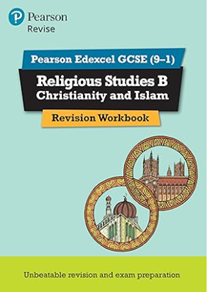
https://tinyurl.com/5ezt49py
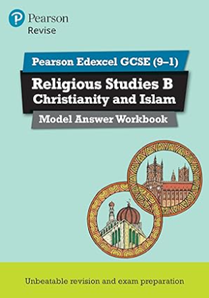
https://tinyurl.com/y3tdaf4c

